Patient portrayals for indolent systemic mastocytosis (ISM)

The following patient portrayals are fictional examples of adult patients living with ISM and being treated with AYVAKIT that were developed from a review of the published literature. This information does not represent medical advice and individual results may vary. Healthcare providers should make all treatment decisions based on diagnostic criteria, clinical practice guidelines, prescribing information, individual patient circumstances, and their independent clinical judgment.

Review of this material does not substitute for a review of the Prescribing Information for AYVAKIT.

Jeff, a hypothetical ISM patient taking AYVAKIT® (avapritinib)Jeff
Sondra, a hypothetical ISM patient taking AYVAKIT® (avapritinib)Sondra

Meet Jeff, a working father frustrated by a multiyear journey to ISM diagnosis, and Sondra, a mother of 3 living with ISM who is embarrassed by her ongoing symptoms.1-5

Hypothetical patients. Individual results may vary.

*Quotes have been fictionalized to align with hypothetical patient profiles.

Jeff

Sondra

Jeff, a hypothetical ISM patient taking AYVAKIT® (avapritinib) sanding wood in a workshop

Patient portrayal

Meet Jeff

CalendarAge: 456
CoupleMarried father of 2
Family statusForeman and softball coach
StethoscopeStruggle with ISM symptom burden leads to work and personal impacts2,3,5


Prior to Jeff's ISM diagnosis with the chief complaints of diarrhea and fatigue
Years one to six prior to Jeff's ISM diagnosis
Hypothetical patient profile of Jeff's experience prior to ISM diagnosis
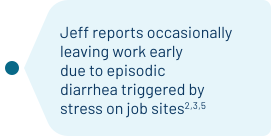
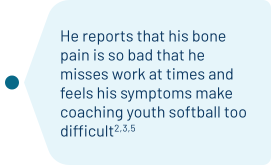
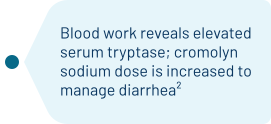
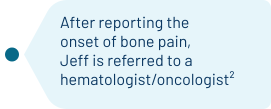
Jeff reports occasionally leaving work early due to episodic diarrhea triggered by stress on job sites.He reports that his bone pain is so bad that he misses work at times and feels his symptoms made coaching youth softball too difficult.Blood work reveals elevated serum tryptase; cromolyn sodium dose is creased to manage diarrhea.After reporting the onset of bone pain, Jeff is referred to a hematologist/oncologist.
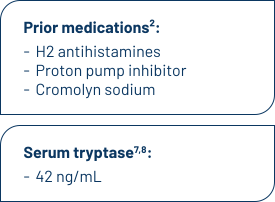
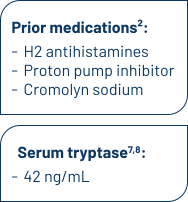
Prior medications to treat symptoms include H2 antihistamines, proton pump inhibitor, and cromolyn sodium. Serum tryptase is 42 mg/mL
Hypothetical patient profile of Jeff after confirmation of ISM diagnosis
Year seven after Jeff's ISM diagnosis is confirmed
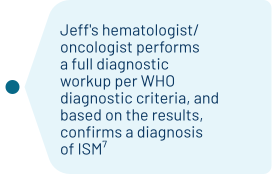
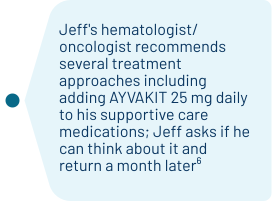
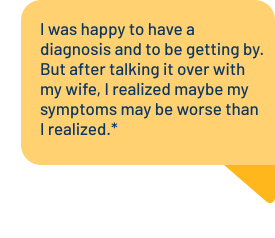
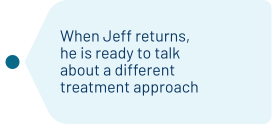
ISM diagnosis confirmedJeff's hematologist/oncologist performs a full diagnostic workup per WHO diagnostic criteria, and based on the results, confirms a diagnosis of ISM.Jeff's hematologist/oncologist recommends several treatment approaches including adding AYVAKIT® (avapritinib) 25mg daily to his supportive care medications: Jeff asks if he can think about it and return a month later.Jeff says: I was happy to have a diagnosis and to be getting by. But after talking it over with my wife, I realized maybe my symptoms may be worse than I realized.When Jeff returns, he is ready to talk about a different treatment approach.
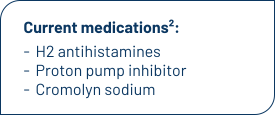
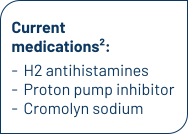
Current medications to treat symptoms include H2 antihistamines, proton pump inhibitor, and cromolyn sodium.
Jeff’s results with AYVAKIT® (avapritinib) over 24 weeks
Sondra, a hypothetical ISM patient taking AYVAKIT® (avapritinib) sitting with her dog

Patient portrayal

Meet Sondra

Age: 476
Married mother of 3
Stay-at-home mom
Struggling to manage disease and symptoms3,4


Prior to Sondra's ISM diagnosis with the chief complaints of rash and itching on the chest and abdomen
Years one and two prior to Sondra's ISM diagnosis
Hypothetical patient profile of Sondra's experience prior to ISM diagnosisSondra says I didn't want anyone to see my skin. I was afraid if I went outside it might flare up and people would stare. Medications helped a little but just weren't enough. It was easier to just stay home than worry about what might happen.
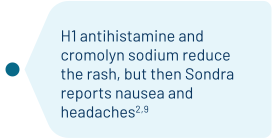
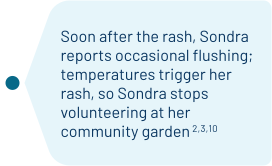
H1 antihistamine and leukotriene antagonist reduce the rash, but then Sondra reports nausea and headaches.Soon after the rash, Sondra reports occasional flushing; temperatures trigger her rash, so Sondra stops volunteering at her community garden.
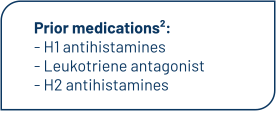
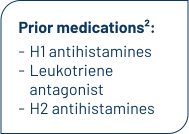
Sondra's prior medications included H1 antihistamines, Leukotriene antagonist, and H2 antihistamines
Hypothetical patient profile of Sondra after confirmation of ISM diagnosis
Years three to nine of Sondra's ISM diagnosis
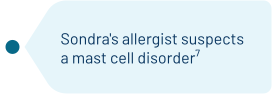
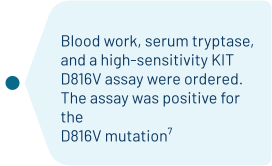
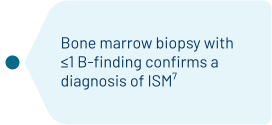
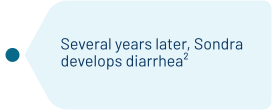
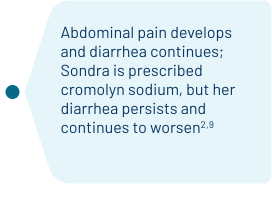
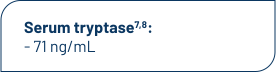
Sondra's ISM diagnosis is confirmedSondra's allergist suspects a mast cell disorderBlood work, serum tryptase, and high-sensitivity KIT D816V assay were ordered. The assay was positive for the D816V mutation.A bone marrow biopsy with less than or equal to 1B-finding confirms a diagnosis of ISM.Several years later, Sondra develops diarrheaAbdominal pain develops and diarrhea continues; Sondra is prescribed cromolyn sodium, but her diarrhea persists and continues to worsen.
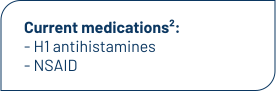
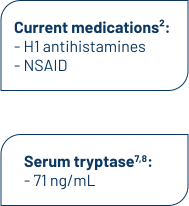
Sondra's current medications include H1 antihistamines and NSAID
Time for a different approach to Sondra's ISM treatment
Year ten of Sondra's ISM diagnosis
Time for a different approach to Sondra's ISM treatmentSondra said, for awhile I was managing. Things were not great, but I felt like I had mostly figured out what I needed. But between the embarrassing rash and the diarrhea, my current treatments just weren't enough. I told my doctor I was finally ready to try something else.
Sandra’s results with AYVAKIT® (avapritinib) over 24 weeks

*Quotes have been fictionalized to align with hypothetical patient profiles.
FDA=Food and Drug Administration; KIT=KIT proto-oncogene, receptor tyrosine kinase; NSAID=non-steroidal anti-inflammatory drug; WHO=World Health Organization.

Access resources for you and your patients taking AYVAKIT

ACCESS AND SUPPORT

Patient portrayal

ISM patient and caregiver

References: 1. Ungerstedt J et al. Cancers. 2022;14(16):3942. 2. Pardanani A. Am J Hematol. 2023;98(7):1097-1116. 3. Data on file. Blueprint Medicines Corporation, Cambridge, MA. 4. Theoharides TC et al. N Engl J Med. 2015;373(2):163-172. 5. van Anrooij B et al. Allergy. 2016;71(11):1585-1593. 6. AYVAKIT [prescribing information]. Cambridge, MA: Blueprint Medicines Corporation; November 2024. 7. WHO Classification of Tumours Editorial Board. Haematolymphoid tumours [Internet]. Lyon (France): International Agency for Research on Cancer; 2024 [cited April 24, 2024]. (WHO Classification of Tumours Series, 5th ed.; vol. 11). Available from: https://tumourclassification.iarc.who.int/chapters/63 8. Dranitsaris G et al. J Oncol Pharm Pract. Published online December 27, 2023. doi:10.1177/10781552231221149 9. Siebenhaar F et al. Immunol Allergy Clin North Am. 2014;34(2):433-447. 10. Jennings SV et al. Immunol Allergy Clin North Am. 2018;38(3):505-525. 11. Kristensen T et al. Am J Hematol. 2014;89(5):493-498. 12. Garcia-Montero AC et al. Blood. 2006;108(7):2366-2372.